
I have good news and bad news for any current or potential EU small group leaders.
First, the good news: It’s rare for people to have an entirely negative experience during a small group gathering.
Now, the bad news: Even though it’s unlikely that people will have a terrible experience during a small group gathering, it can be rare as well for group members to share an ongoing transformative experience.
So how do small groups become more than just a small experience?
Our small groups are like a child – who is growing and changing all the time! As they do so they go through different stages of maturity and require different things from the parents who look after them.
In the late-sixties, a useful model was developed by Tuckman to describe the stages of a group[1]:
- Forming: is where a group begins and new members are identifying with the aims, norms and practices of the leader. Key Question: am I a member of this group?
- Storming: Members are working out whether to trust and invest in the group. Intra-group conflict begins. Key Question: who controls this group?
- Norming: the roles of members are now getting settled and the relationships and group culture are more cohesive. Key Question: what are the rules of this group?
- Performing: the group is working well together and moves into the high point of group performance. Key Question: how much growth will this group achieve?
- Mourning: the end of the group. Key Question: where do we go from here?
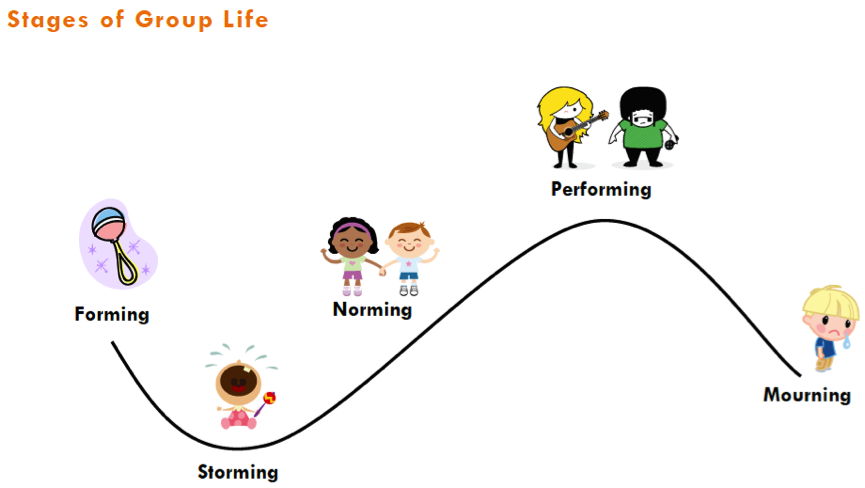
It is important for us as leaders to nurture our groups carefully, by knowing the under-pinning questions of our group members during different group stages.
Please pray for our small group leaders and members, as we grow together in our Christian maturity. For, “it is Christ whom we proclaim, warning everyone and teaching everyone in all wisdom, so that we may present everyone mature in Christ.” Praise to Him!
[1] “Developmental Sequence in Small Groups” (1965) Bruce Tuckman. Watson, Vallee and Mulford further developed the model in subsequent years.