

Think back to a time when you felt lost.
Perhaps you were in a foreign city, where unfamiliar streets branched in every direction and even ordering dinner required more courage than you expected. You had a map, but little confidence in your bearings; a few words of the language, but not enough to make yourself understood. Or perhaps it was not a place you had lost, but a sense of belonging: the sound of familiar voices, the ease of being understood, the ordinary comforts you scarcely noticed until they were far away.
For some of us, that feeling passes quickly. For many international students at the University of Sydney, it becomes part of daily life. Studying abroad holds extraordinary promise: new opportunities, new friendships, and the hope of a future their parents may never have imagined for themselves. Yet hope and loneliness often travel together. A language barrier can turn a simple exchange into an ordeal. Unfamiliar customs can make an ordinary day exhausting. A student may be surrounded by people and possibilities, yet still long for somewhere to call home.
Homesickness can also help us recognise a deeper kind of lostness, one that no map can resolve, and no change of circumstances can put right. Scripture describes our estrangement from the God who made us: we are like sheep who have gone astray, each turning to our own way. This is not a condition peculiar to those far from their homeland. We may know every street in our neighbourhood, speak with confidence, and be surrounded by friends, yet remain far from the Shepherd we were made to know.
Yet the glorious news of the gospel is that the Shepherd has not abandoned us to wander in the darkness of our sin. Jesus came to seek and save the lost. He does not stand at a distance, waiting for us to discover the way back. He comes near, lays down his life for his sheep, and gathers them to himself. Our hope rests not in our ability to find him, but in his grace in finding us. The home he brings us into is more than a familiar place. It is forgiveness, reconciliation with God, and the assurance that we belong to him.
This is the good news Focus seeks to proclaim at the University of Sydney. Among international students finding their way in a new country, we long to offer genuine friendship, a welcoming community, and opportunities to meet Jesus through his Word. We cannot remove every difficulty of life far from home. But we can walk alongside students in their loneliness, listen carefully to their questions, and point them to the Saviour whose welcome reaches across every language and nation.
Looking back over this year, I have much for which to thank God, his kindness to Focus, his faithfulness to our students, and the ways he has drawn people to himself. Some encouragements have been large and visible. We hear accounts of mass gatherings of explorers with gratitude, and we rejoice in the fruit of our recent Love, Jesus mission. These are wonderful reasons to give God praise.
Yet this year has also taught us to notice the quieter workings of his grace. The God who gathers a crowd does not overlook a solitary person. He works through weakness, patient friendship, and conversations no one thinks to record. What passes unnoticed by us may become a turning point in someone’s life. We can give thanks for what he has allowed us to witness and trust him with all that remains beyond our sight.
One of this year’s great encouragements has been the beginning of a new ministry alongside our usual Come Home Dinner. By God’s grace, students have grown in the maturity of their faith, and our fellowship has grown in number and capacity. Eventually, our usual room could no longer hold everyone. It was a good problem to have, and it opened the door to a new opportunity. This year, we began Discovery Dinner: a second “Come Home Dinner”, especially for international students who want space to ask honest questions and explore who Jesus is.
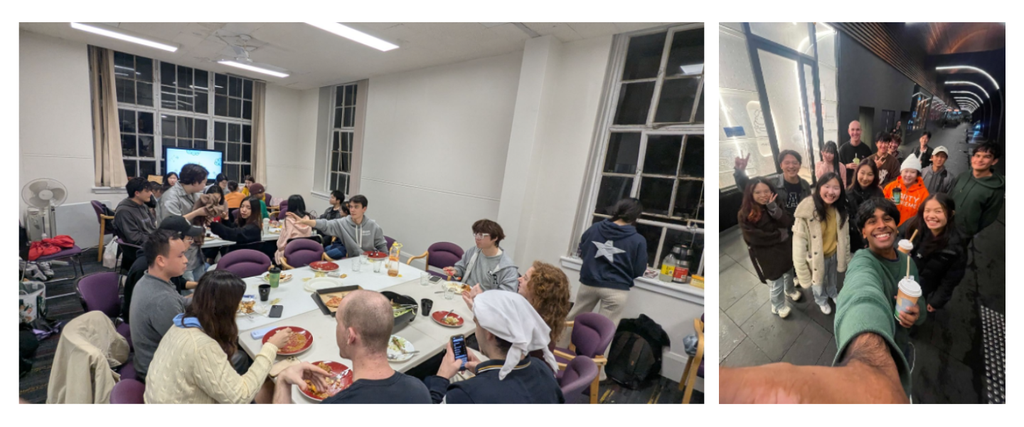
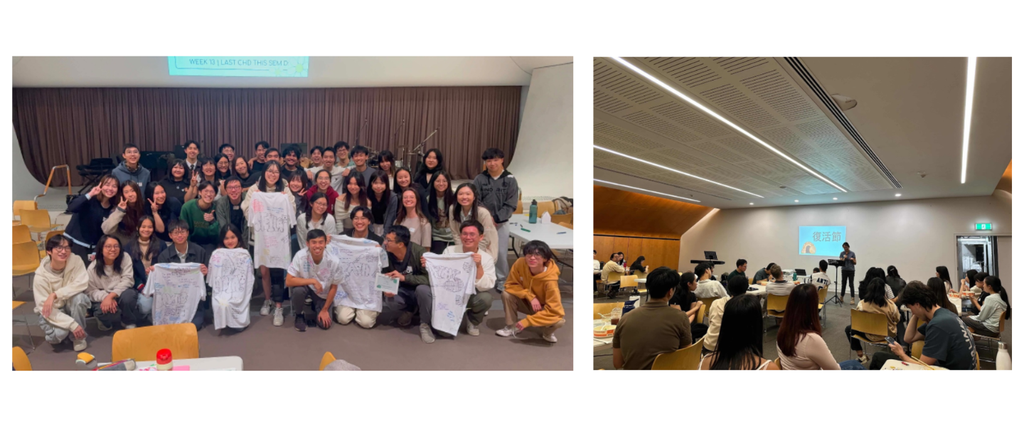
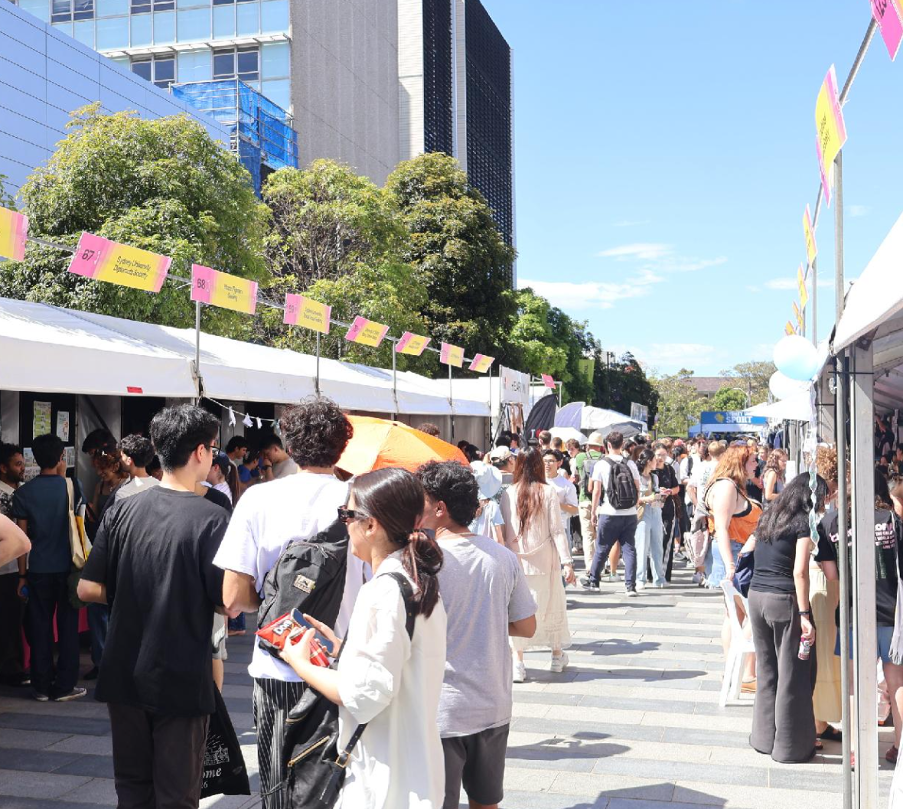
God has used that simple beginning in ways we could not have anticipated. One of the clearest examples is Sophie* (name changed for privacy), a student from China whom we first met during Welcome Week.
It was a Friday, and most of the EU students were away at Launch Day. We still had a stall to run, but with fewer people available, the day seemed likely to offer fewer opportunities for meaningful connections than the earlier days of the week.
Then Sophie walked past.
She stopped, and we began to talk. There was nothing outwardly remarkable about the moment: a stall, a conversation, a welcome. Yet Sophie was genuinely touched by the warmth of the students she met, and her curiosity about Jesus began to grow. She came to Discovery Dinner and, little by little, began to learn more about him.
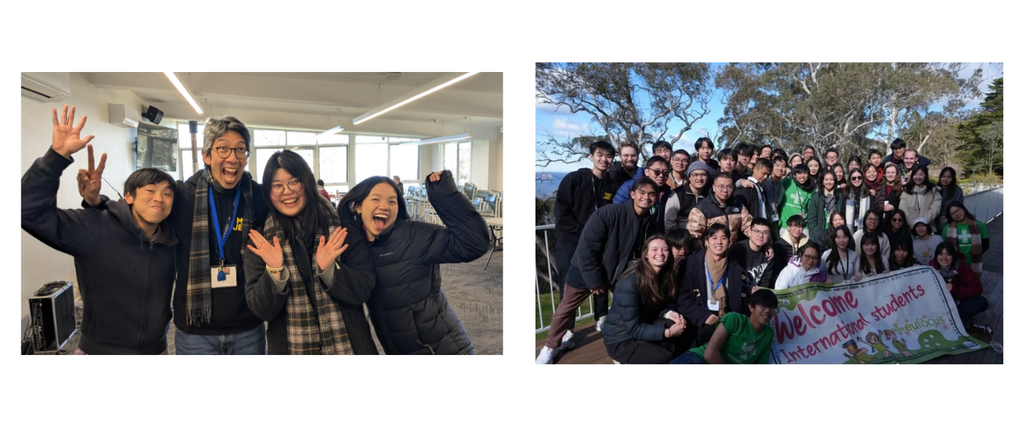
At AnCon, that growing interest became something deeper. Sophie came to see Jesus not merely as an intriguing figure or a distant religious idea, but as Lord and Saviour. She put her faith in him with joy.
Since then, it has been beautiful to see the change in her. There is a new hope and gladness in her life, evident even in her face. And she wants others to share it. She has already been inviting people to Discovery Dinner so that they, too, might hear about Jesus.
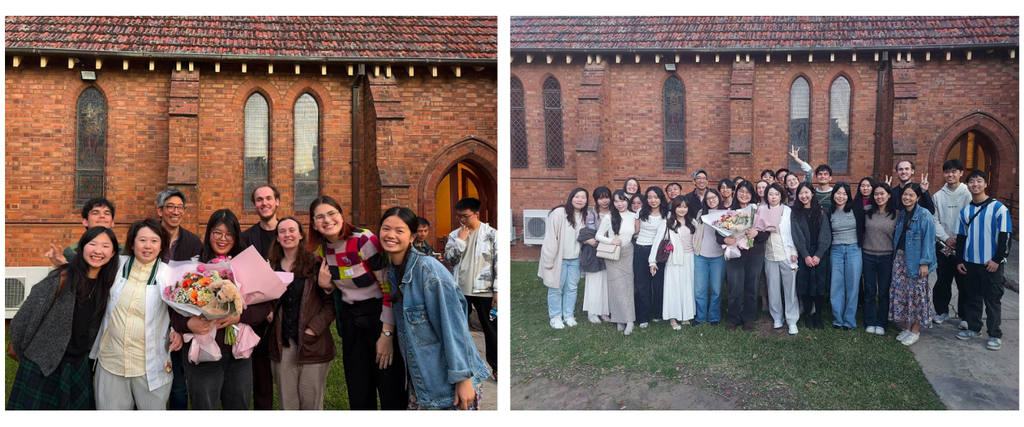
At the end of the month, we had the profound joy of witnessing her baptism. It was more than a happy conclusion to an encouraging story. It was a public testimony to the grace of God, who calls people out of darkness and into the life of his Son.
Standing before the church, Sophie described the path by which God had led her. Her first curiosity about Christianity had begun when she discovered that her favourite singer was a Christian. It seemed such a small thing. Yet that passing interest had led to questions, conversations, friendships, and opportunities to hear God’s Word. As she looked back, she could begin to recognise his providence in circumstances she had not understood at the time.
Listening to her, I was reminded of a tapestry. Seen from the back, it can appear to be a confusion of knots, loose ends, and threads crossing without any discernible pattern. Sophie’s loneliness, and her deep longing to be truly known and loved, had often felt like that. Now, as she came to know Christ, she was beginning to see those experiences in a different light. The pain had been real, but it had not placed her beyond God’s reach. Through the patient love of Christian friends and the truth of the gospel, God had been drawing her towards himself.
Perhaps the most moving part of her testimony was her simple desire to follow Jesus wherever he might lead her. She did not speak as though faith guaranteed an easy road. She spoke as someone who had found a treasure worth more than ease. Whether the future held joy or sorrow, clarity or uncertainty, she knew that she belonged to Christ. Nothing the world could offer could equal the worth of knowing him.
Her words warmed our hearts, but they searched them too. Those of us who have known Christ for many years can grow accustomed to hearing of his grace without pausing to marvel at it. The gospel that once filled us with awe can become so familiar that we scarcely attend to its wonder. Then suffering comes, and we struggle to trust the goodness of God we readily praised in easier days.
Sophie’s testimony called us back to what is true: God’s love is not diminished by changing circumstances, the gospel is not merely good news for our past, and Christ is not one treasure among many. To know him is the greatest gift of all. With Paul, we can say:
Indeed, I count everything as loss because of the surpassing worth of knowing Christ Jesus my Lord. For his sake I have suffered the loss of all things and count them as rubbish, in order that I may gain Christ. – Philippians 3:8
Sophie’s story is one among many, but it reminds us never to think of people merely as a multitude. Among the thousands who arrive on campus each week are students carrying the questions she once carried: Am I known? Am I loved? Is there somewhere I can truly belong?
It is easy to see only a crowded lecture theatre, a busy walkway, or another unfamiliar face. Yet each person is made in the image of God, someone we are called to know and love. Our prayer is that many more international students would come to know Jesus, not simply as a name associated with Christianity, but as the Saviour who reconciles us to God and welcomes us into his family.
The scale of that prayer can make our efforts seem small. What are a few dinners, a handful of conversations, or an invitation offered at a stall in the face of so much loneliness and spiritual need? Left to ourselves, we have no power to awaken faith in another heart.
But we are not left to ourselves. The gospel we share is the good news of the risen Christ, the power of God for salvation to everyone who believes. The same Lord who drew Stella to himself is at work beyond the limits of our sight. We sow and water; God gives the growth, and to him belongs the glory.
So, we need not despise the ordinary things through which he so often works: a meal prepared, a question welcomed, a passage of Scripture patiently explored, a friendship sustained when there is little visible response. We cannot know which conversation will be remembered, which invitation will be accepted, or which words of Scripture will return to someone in a lonely hour. We can be faithful to the person God has placed before us, trusting that the outcome rests with him.
I hope Stella’s story encourages you in the opportunities God has given you, too. A conversation that gently turns towards Christ, an invitation to church, a prayer for a friend who does not yet know him – none of these is beneath his notice or beyond his use. We need neither to manufacture remarkable moments nor to wait for them. We can love the people before us and speak of the Saviour we have come to know.
My prayer is that God would give us gracious boldness in our workplaces and daily relationships; not the urgency of trying to secure a result, but the quiet courage that grows from loving Christ and loving people. May we be attentive to the opportunities he gives us, willing to step into them, and content to leave the fruit in his hands.
As we look to the year ahead, would you join us in praying for Focus? Pray that our welcome would be generous because Christ has welcomed us, that our confidence would rest in his Word, and that our love would persevere. Pray for students who are curious but hesitant, for those whose questions carry deep wounds, and for those who have never imagined that the gospel could be good news for them. Pray that many more international students would come to know Jesus.
And pray for those of us who already know him, that we would not lose our wonder at his grace. May God give us humility, courage, and joy as we make him known, trusting that the Shepherd who found us is still seeking the lost.
The future towards which he is gathering his people is greater than anything we can build on campus. It is the home for which every small act of gospel welcome is a foretaste: a people drawn from every nation, no longer strangers, united in worship before their Saviour.
After this I looked, and there before me was a great multitude that no one could count, from every nation, tribe, people and language, standing before the throne and before the Lamb. They were wearing white robes and were holding palm branches in their hands. And they cried out in a loud voice:
“Salvation belongs to our God, who sits on the throne, and to the Lamb.” – Revelation 7:9–10
Will you join us in this prayer?
Back to News