
God wants to grow us spiritually, but the means he uses are not always easy for us to face. In the last week, I have had to own up to a pretty significant failure for which I was responsible. It was the right thing to do, but it was uncomfortably humbling. Even so, I found myself not really wanting to ask God how I should grow spiritually as a result of that failure.
Also in the last week or so, I have had to face the fact that a significant relationship has included seeds of friction—elements that have weakened and undermined full trust in what should be a relationship of mutual joy and encouragement. Again, at first, I wasn’t sure if I could really ask for spiritual growth in this arena of my life.
At home, my almost-2-year-old son asks me to sing “EIEIO” (Old MacDonald had a farm) again and again until I am nearly dead. I love toddlers. I think I have more patience than others when it comes to singing nursery rhymes on repeat. But this child has an insatiable appetite for my singing about cows on farms, and the God-given ability to make it difficult for me to hear myself think if I happen to stop before he is ready.
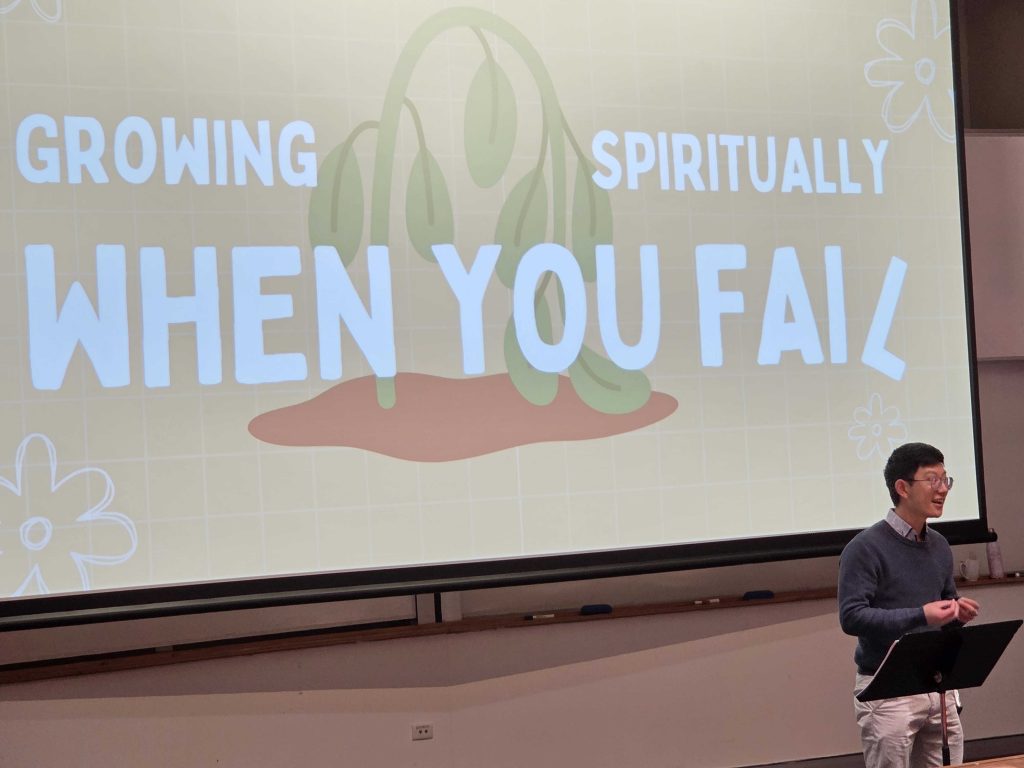
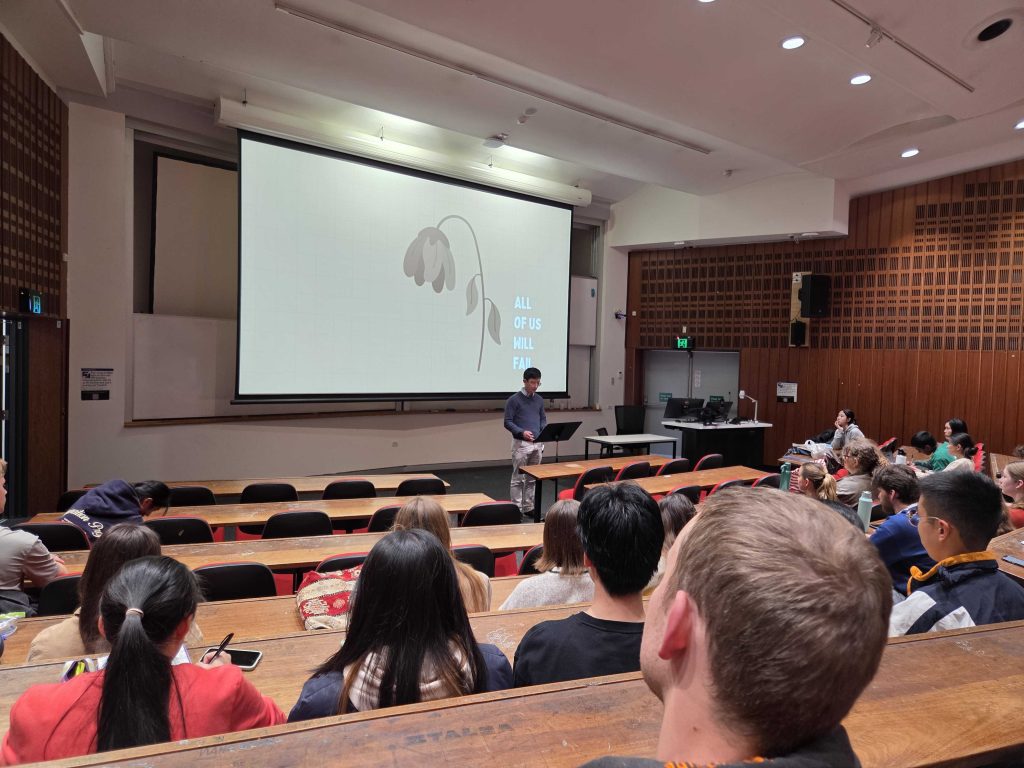
Right now I’m preaching a series titled, “Growing Spiritually (Even when it hurts)”. It asks the question of how we can grow when we fail, when there’s friction, and when we’re bored.
I chose this topic because I’m convinced that God often uses our hard experiences to turn us toward him in faith and hope, and to teach us how to grow in love for him and for others. He uses our experiences of heartbreak, conflict, rejection, disappointment, and so on to make us more humble, more patient, more kind, more prayerful, more trusting, and even more joyful.
Or at least, growth is possible. It is also possible that we face suffering and hardship and difficulty in an ungodly way, which leads not to spiritual growth but to selfish and sinful responses. Many don’t learn from their mistakes and get stuck making excuses for themselves while blaming and judging others. I’m realising that it’s just as easy for me to get stuck in this way as it is for anyone else.
So I need to do the hard work of putting into practice what I preach. I need to come into my own failures (of which I am increasingly aware), my own conflicts (which are hard enough as a natural conflict-avoider), and my own boredom (which still appears even though I can’t imagine life getting any busier) with an attitude that seeks God’s glory, not mine. I need to come willing to be challenged and changed. I need to keep coming to God in prayer, and I need to keep putting my trust and hope in him, not in me.
I don’t think these talks will be particularly difficult to understand. But my experience is that they are hard to live. I am reminded that often what we need is not more information or new facts, as useful as that may be. Often, what we need is the re-application of old truths into deeper areas of our lives.
The EU’s second Object is “to strengthen Christians in their faith and witness and encourage them to continually submit every aspect of their lives to the Lordship of Christ”; I’m trying to help myself, and the students at Public Meetings, to reflect on the goodness of this even when it hurts.
Stay tuned on the sydneyunieu YouTube channel and sydneyunieu podcast for Brian’s “Growing Spiritually (Even when it hurts)” talks, and recordings from the EU’s Public Meetings, AnCon, and other talks.
Back to News